Exciting changes are coming!
The Dignity Health website is moving to CommonSpirit.org to deliver a more patient-centered digital experience across CA, AZ, and NV.

Weight Loss Surgery experts at Dignity Health Medical Group
The expert surgical weight loss team at Dignity Health Medical Group team will guide you every step of the way, helping you create a new life filled with improved health, increased activity, and greater longevity. Let us help you achieve your weight loss goals and unlock your full potential
Weight loss surgery is a significant and life-changing decision, requiring courage, care, and ongoing support. At Dignity Health, we understand the importance of a comprehensive approach. Our team of compassionate, dedicated professionals will be with you every step of the way through the following phases:
● Medical Weight Loss
● Pre-surgery
● Weight loss surgery
● Long term post-surgery
Your journey begins with a meeting to understand your personal goals. Together we carefully select the appropriate weight loss procedure for your individual needs. We have developed a comprehensive, multidisciplinary approach to help you achieve and sustain weight loss success.
We believe that support is crucial for long-term success after weight loss surgery. That's why we offer a variety of resources, including our valuable online support group. Call 702.675.3240 today for a consultation. We'll help you understand your options and determine the best surgical weight loss path for you.
You may be eligible for bariatric surgery if your Body Mass Index (BMI) is 30 or greater and you experience one or more of these health issues:
● Morbid obesity
● Arthritis
● Sleep apnea
● High Blood Pressure (hypertension)
● High cholesterol
● Type 2 diabetes
● If you have struggled to lose weight through traditional methods and are ready to commit to long-term dietary, exercise and healthy habits.
We offer several weight loss procedures, each offering unique benefits and helping with weight loss in different ways.
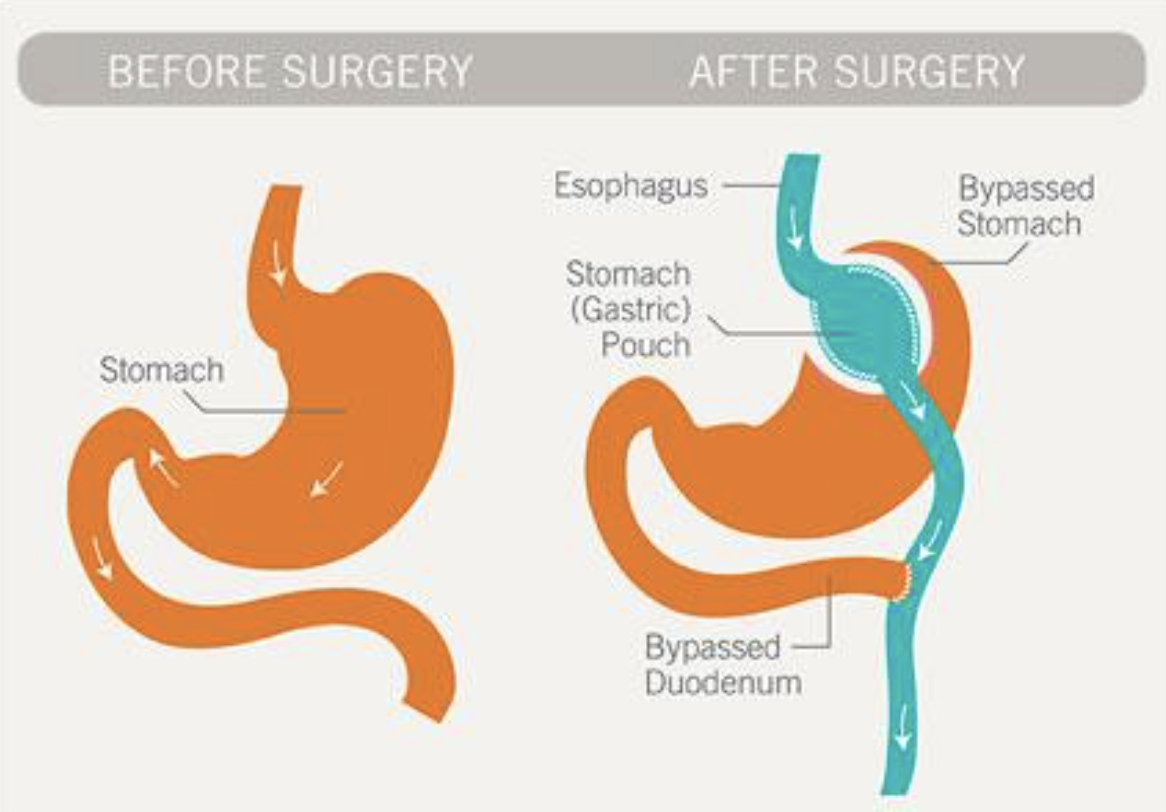
Roux-en-Y, or gastric bypass surgery, is the most common procedure for weight loss. With gastric bypass, your surgeon creates a smaller stomach by stapling across the top part of your stomach to create a small pouch about 2-3 ounces in size. The rest of your stomach is completely separated from the pouch but not removed from your body. Your surgeon bypasses parts of your intestine, which results in fewer calories and nutrients being absorbed, changes gut hormones that promote satiety, suppresses hunger, and thereby results in weight loss and in some cases reverses Type 2 diabetes.
Most often, Roux-en-Y gastric bypass uses a minimally invasive laparoscopic technique; however, a traditional open surgery may be necessary based on your past medical or surgical history.
Benefits
There are many benefits to sleeve gastrectomy as a surgical weight loss option:
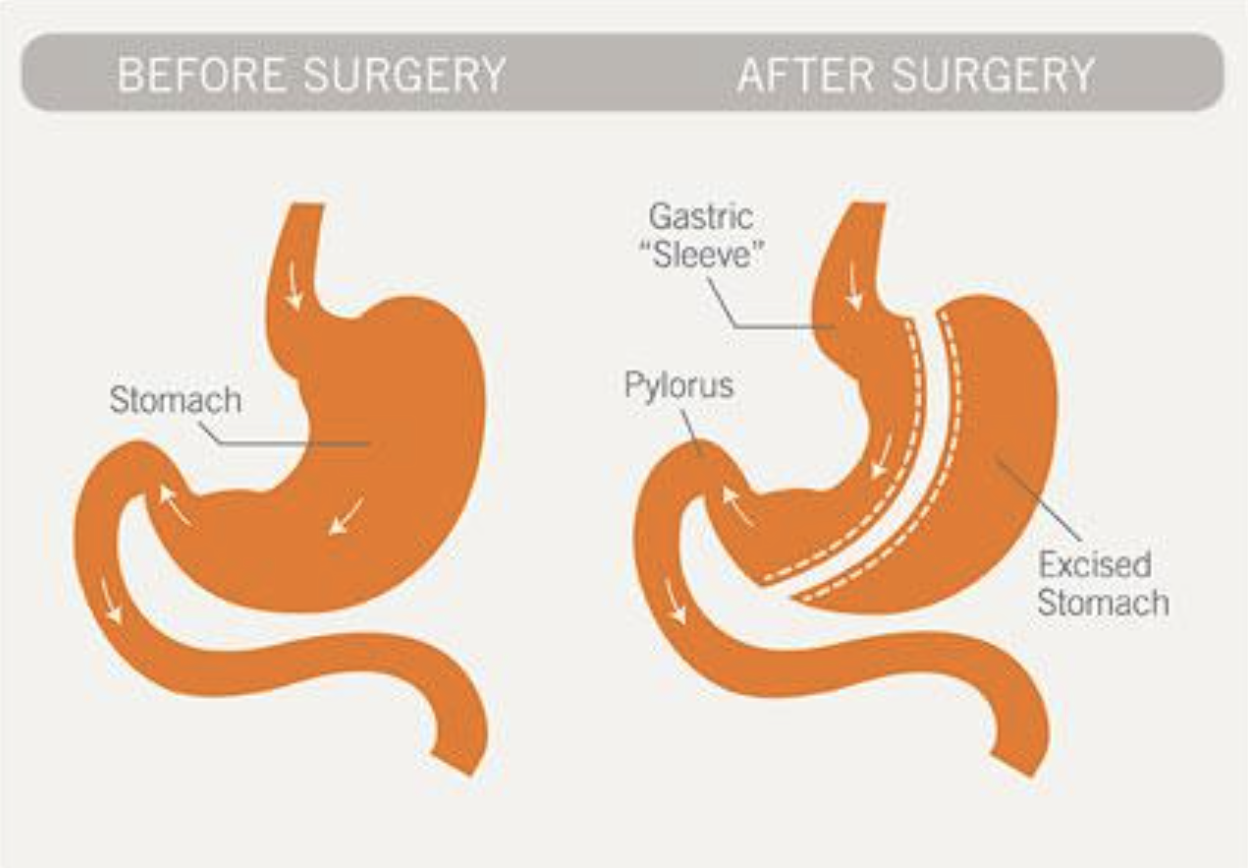
Sleeve gastrectomy is a restrictive procedure that removes 80% percent of the stomach. The new stomach is a tubular banana-size pouch that holds much less food than the normal stomach and helps to significantly reduce the amount of food (and thus calories) that can be consumed. Although this surgery drastically reduces the size of the stomach, it will still function normally afterward.
Since sleeve gastrectomy does not involve any bypass of the intestinal tract, it can be performed using a minimally invasive, laparoscopic surgical technique.
Sleeve gastrectomy or gastric sleeve refers to a procedure in which the stomach is divided vertically allowing relatively normal processing of food and nutrients. This procedure is the most commonly performed bariatric surgery and allows you to decrease portion sizes as you feel full sooner and stay full longer. There is significant resolution of comorbid obesity-related diseases post-operatively, like diabetes, hypertension, sleep apnea, etc.
Benefits
There are many benefits to sleeve gastric bypass as a surgical weight loss option:
Duodenal Switch (DS) and SADI-S are powerful bariatric surgeries that combine stomach reduction with intestinal rerouting to limit food intake and calorie absorption, leading to significant weight loss and improved health. However, they carry risks like nutrient deficiencies and require lifelong vitamin supplementation and strict adherence to a specific diet. These procedures are typically reserved for individuals with severe obesity and related health issues who haven't found success with other methods.
Key Differences between DS and SADI-S:
Benefits of Duodenal Switch Procedures:
Gastric band removal is a surgical procedure to remove a previously implanted adjustable gastric band. This band, placed around the upper part of the stomach to restrict food intake, may be removed for various reasons.
Gastric band removal is typically performed laparoscopically (using small incisions and a camera). The surgeon:
Bariatric revision surgery refers to any surgical procedure performed to modify or correct a previous bariatric surgery. It's undertaken when the initial surgery has failed to achieve the desired weight loss, has resulted in complications, or is no longer effective.
The specific revision procedure depends on the initial surgery and the reason for revision.
As part of the St. Rose Weight Loss Program, our online support group, ran by coordinator Stacie Osborne, offers a safe and supportive environment where you can connect with others undergoing similar experiences. These small group sessions offer the opportunity to:
Share Your Story: Connect with others who understand your feelings and concerns.
Celebrate Successes: Share your achievements and inspire others on their journey.
Address Challenges: Discuss difficulties and receive valuable advice and encouragement.
Build a Strong Support System: Meet individuals who can become a vital part of your support network.
The online support group meets every third Wednesday of the month, 12 p.m. - 1 p.m.
Zoom Meeting
ID: 93949656758
Passcode: 190246
Our expert Dignity Health Bariatric surgeons specialize in Robotic and Minimally Invasive Surgery.
Minimally invasive bariatric surgery encompasses a range of surgical procedures performed through small incisions, typically using laparoscopic or robot-assisted techniques. This contrasts with traditional "open" surgery, which requires larger incisions.
Compared to traditional open surgery, minimally invasive bariatric surgery offers several advantages:
● Smaller scars: Less noticeable scarring due to the small incisions.
● Reduced pain: Less tissue trauma results in less post-operative pain.
● Faster recovery: Patients typically return to their normal activities sooner.
● Lower risk of infection: Smaller incisions minimize the risk of infection.
● Shorter hospital stay: Many patients can go home sooner after surgery.
● Improved cosmetic outcomes: Less scarring can lead to better cosmetic results.
Yes. Many insurance companies require patients to be on a weight loss program before qualifying for Bariatric surgery.
Many health insurance plans cover weight loss surgery. Talk to your surgeon about health plans in your area that cover bariatric procedures. Insurance plans change periodically. Visit the Insurance Plans page to view the plans currently accepted at Dignity Health - St. Rose Dominican hospitals. Participation should be validated by contacting your insurance company.
Choosing a surgical weight loss method is an important decision. While there are many benefits, there are inherent risks, as with any surgery. Weight loss surgery should be considered only after other nonsurgical options have failed. We’re here to help you understand your options and provide the care and support to help make a lasting change in your life. Always talk to your doctor about all treatment options, as well as the associated benefits and risks.