Exciting changes are coming!
The Dignity Health website is moving to CommonSpirit.org to deliver a more patient-centered digital experience across CA, AZ, and NV.
A stroke is a medical emergency that requires immediate treatment to prevent loss of brain function.
The neurology team at Dignity Health North State offer coordinated stroke care at our Northern California hospitals. Call 911 or visit your nearest emergency room if you or someone you know is experiencing a stroke.
To learn more about our personalized stroke prevention, treatment, and rehabilitation in Northern California, Find a Doctor today.
Prompt treatment for stroke is essential in order to avoid debilitation. Your treatment may include surgery, medications, lifestyle changes, and rehabilitation. Because stroke is a life-threatening emergency, you may not have many options regarding treatment.
Portions of your treatment plan will depend on whether a stroke is caused by a blood clot or bleeding in the brain. Treatment for ischemic stroke, which is caused by a blood clot, includes a minimally invasive procedure to remove the clot, an anticoagulant medication to dissolve the clot, or a combination of the two. Treatment for hemorrhagic stroke, which is caused by bleeding in the brain, includes either open or minimally invasive surgery to stop the bleeding.
Treatments that are used for all types of stroke include:
If you or your loved one has specific beliefs or wishes regarding medical intervention, tell your doctor, so they can plan your treatment accordingly.
Rehabilitation is a key part of stroke treatment and recovery. It involves a team of experts, such as physical, occupational, and speech therapists, who help people regain lost abilities and learn new ways to perform everyday tasks like eating, bathing, and walking. Starting as soon as possible in the hospital and continuing at home or in a rehab center, this therapy aims to prevent problems and maximize independence. Psychologists may also play a vital role by providing counseling to help stroke survivors and their families cope with changes and address issues with thinking and memory. Ultimately, this team effort focuses on improving the overall quality of life after a stroke.
Resources: The Role of Physical Therapy in Stroke Rehabilitation, American Stroke Association Stroke Rehab Resources
You can reduce your risk of stroke by adopting a heart-healthy lifestyle and protecting your brain.
Start with these strategies:
When you take care of your heart, you also help ensure your blood vessels stay healthy. Healthy blood vessels are open and flexible, which helps reduce the risk of stroke.
Eating a healthy diet, as recommended by the American Stroke Association, is one key to helping prevent strokes. Prioritize plenty of fruits, vegetables, whole grains, and the use of healthy oils such as olive oil. Incorporate lean proteins such as fish, poultry without skin, beans, and nuts, while choosing low-fat or fat-free dairy and minimizing sodium. It's also important to limit salt, sugary drinks, red meat, and egg yolks, as well as processed foods. Maintaining a healthy weight through balanced eating and exercise further lowers your risk, which may help prevent stroke. This diet can also promote overall health and well-being.
Resources: Help Reduce Stroke Risk with a Healthy Diet, Eat Smart by American Stroke Association, Diet for Stroke Prevention
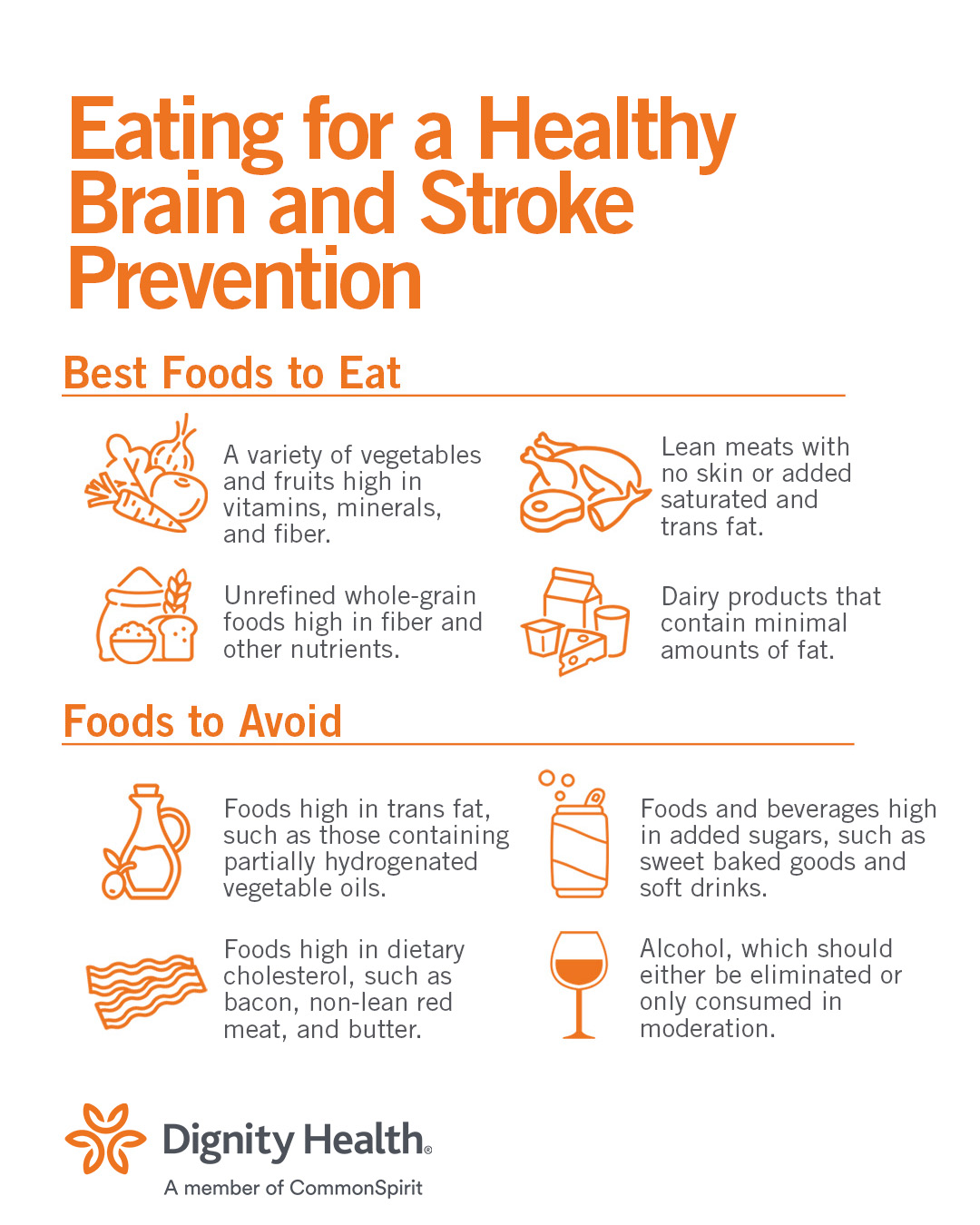
*Click on the image to view a larger version
You can trust our neurological team at Dignity Health North State to provide a personalized and effective treatment plan.
Talk to your doctor at Dignity Health North State hospitals about stroke treatment in Mt. Shasta, Red Bluff, and Redding, CA.