Exciting changes are coming!
The Dignity Health website is moving to CommonSpirit.org to deliver a more patient-centered digital experience across CA, AZ, and NV.

Taking proactive steps in your health journey is one of the most powerful things you can do for yourself and your loved ones. At Dignity Health, we believe in empowering you with clear, reliable information to make informed decisions about your well-being.
Cancer screening can often detect cancer at its earliest, most treatable stages, when therapies are most effective. Knowing when and how to screen for common cancers is a vital part of preventive care. While these guidelines provide a helpful roadmap, please remember that every individual's health journey is unique. Your personal medical history, family background, and lifestyle all play a role in determining the most appropriate screening schedule for you.
To help you navigate these important choices, we've compiled easy-to-understand summaries of current cancer screening guidelines for women and men. This table outlines recommended ages, testing methods, and frequencies for various common cancers. Please note screening frequency may change based on results and physician recommendations.
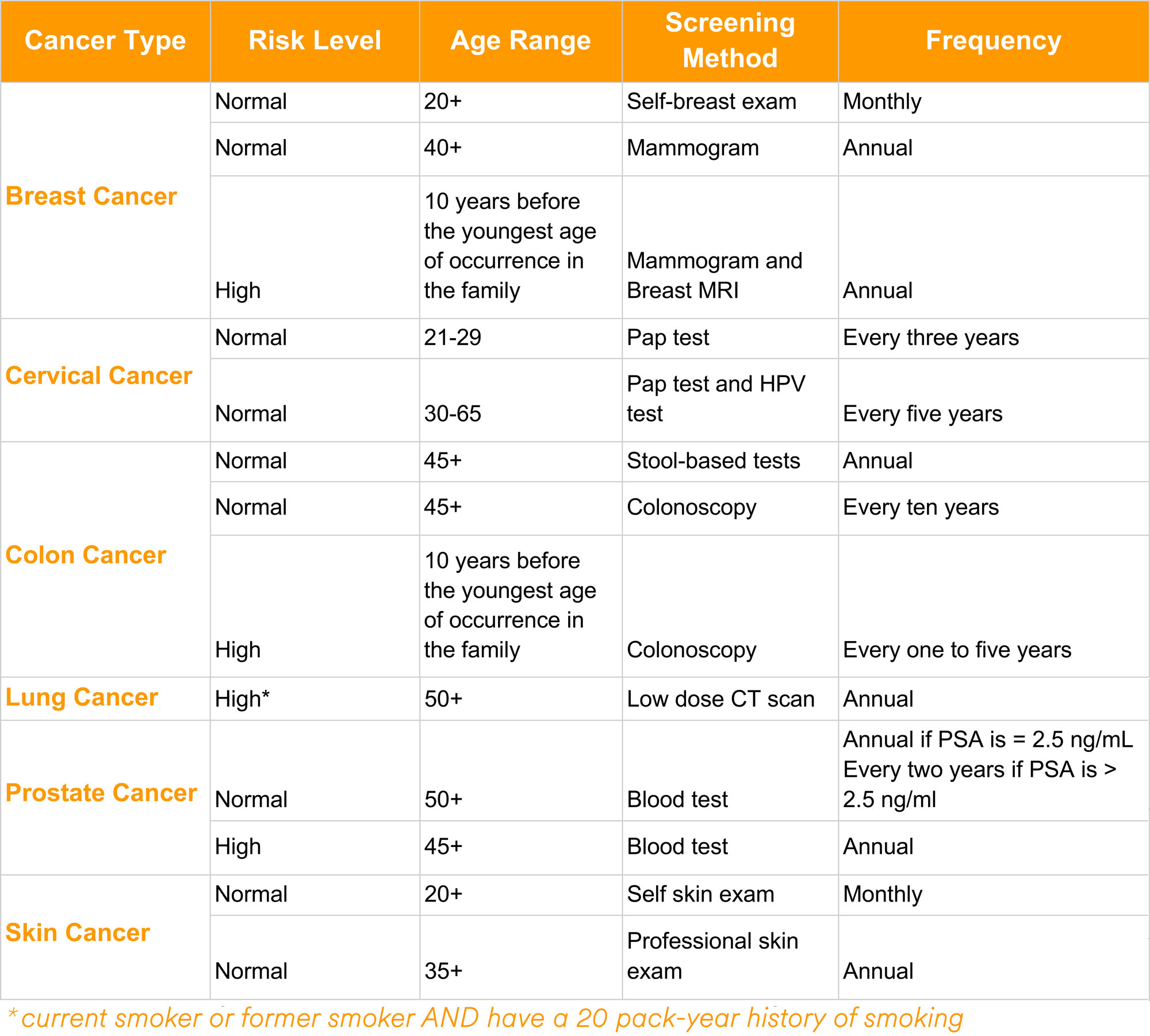
While these guidelines are a fantastic starting point, they are not a substitute for personalized medical advice. We strongly encourage you to schedule a visit with your primary care provider to review your individual risk factors, clarify any questions you may have, and help you create a personalized screening plan tailored just for you.
Your health is our priority. Let's work together to protect it.
Don’t have a doctor? We can help. Use our Find a Doctor tool to locate a provider near you.
Why are these guidelines so important?
Early detection through screening significantly increases the chances of successful treatment for many cancers.
What if I have a family history of cancer?
If you have a strong family history of certain cancers, your screening recommendations may differ from the average guidelines. Be sure to discuss this with your doctor.
What does "shared decision-making" mean for cancer screening?
For some cancers, screening involves a conversation between you and your doctor about the potential benefits and risks of testing, allowing you to make an informed decision that aligns with your personal values and health goals.
Where can I learn more?
Learn more about the Dignity Health Cancer Institute of Greater Sacramento, preventive services, and our world-class cancer care here.