Exciting changes are coming!
The Dignity Health website is moving to CommonSpirit.org to deliver a more patient-centered digital experience across CA, AZ, and NV.

At the Dignity Health Heartburn and GERD Center, we provide multispecialty expertise and the most advanced techniques to diagnose and treat symptomatic heartburn and related conditions.
If you're suffering from heartburn, let us help you find relief.
Symptoms may include:
Conditions can include:
Heartburn is the feeling of acid reflux, which is the backflow of stomach contents (such as acid and gastric juice) into the esophagus, the tube that connects the throat to the stomach. Heartburn is a mild burning sensation in the mid-chest, often occurring after meals or when lying down. The feelings of heartburn can increase due to smoking, eating too much close to bedtime and certain foods such as chocolate, mint, alcohol, pepper, spicy foods, high-fat foods, or drinks with caffeine in them, such as tea, coffee, colas, or energy drinks.
Gastroesophageal reflux disease (GERD) is a more serious form of acid reflux. In GERD, the backflow of stomach acid into the esophagus occurs chronically and causes damage to the body over time. This can also cause pain and inflammation in your esophagus (esophagitis).
GERD happens because of a problem with a one-way valve at the gastroesophageal junction, which allows food and drink to pass from the esophagus into the stomach but prevents reflux back into the esophagus. This valve is anatomically formed by the sharp angle where the esophagus enters the stomach, called the Angle of His. With GERD, the valve doesn't work well.
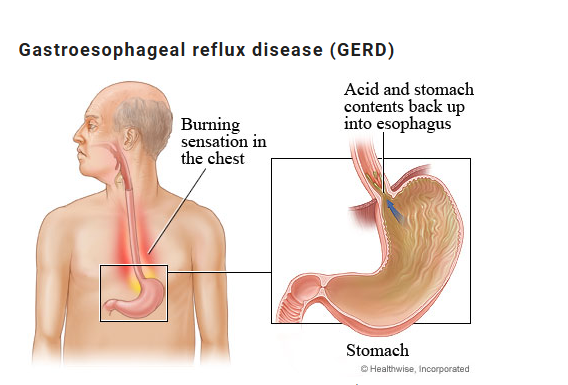
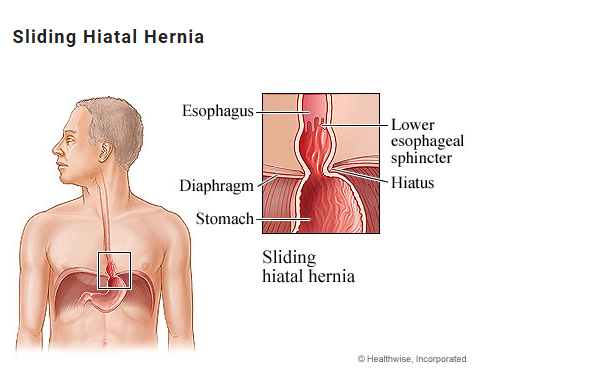
The most common cause of GERD is a hiatal hernia, even if small. A hiatal hernia happens when part of your stomach bulges up through the diaphragm and into your chest. This hiatal hernia greatly reduces the acute angle between the esophagus and the stomach, making the one way valve like a jet propulsion system.
The biggest cause of a hiatal hernia is excess abdominal weight and obesity. Pregnancy can also contribute to GERD and hiatal hernia formation.
Copyrighted material adapted with permission from Ignite Healthwise, LLC. This information does not replace the advice of a doctor.
We have a variety of testing options to help us properly diagnose each our patient's condition.
Esophageal Testing
Gastric Testing
Small Bowel Testing
Our team of experts uses the latest surgical techniques to provide the best possible care for esophageal and stomach diseases.
Hiatal hernia repair and fundoplication: This procedure brings the stomach back into the abdomen and out of the chest, closes the widened hole in the diaphragm around the esophagus, and wraps the stomach around the esophagus to recreate the gastroesophageal flap valve.
Distal esophageal (Heller) myotomy: This procedure cuts excessive muscle at the end of the esophagus and relieves swallowing difficulties caused by achalasia.
Upper endoscopy (EGD): Under sedation, a camera is used to diagnose and often treat esophageal, gastric and intestinal conditions. This sometimes utilizes dilators, injections, suturing, electrocautery and other advanced techniques.
BARRX: This minimally invasive outpatient procedure performed by upper endoscopy provides a safe, effective treatment for Barrett's esophagus. Thermal ablation is used to remove damaged tissue in the esophagus and eliminate this potential precursor to esophageal cancer.
Robotic surgery: Many of our surgeries are performed using the Intuitive da vinci robotic surgery system. Using da Vinci, surgeons can perform delicate and complex operations through a few small incisions.
Patients enjoy many potential benefits, including:
LINX® Reflux Management System: This minimally invasive surgical option for the treatment of GERD consists of small band of magnetized titanium beads wrapped around the lower esophagus. Once in place, the LINX® System works immediately to prevent reflux.
Transoral Incisionless Fundoplication (TIF): An endoscopy procedure under sedation, with a camera down your throat, to recreate the Angle of His and a functional gastroesophageal flap valve.
Remote patient monitoring: this program is the latest technology that allows patients to discharge home after surgery with continued vital sign and nursing monitoring, avoiding overnight admission to the hospital.
All of our treatments aim to reduce reflux, prevent damage to your esophagus, and prevent problems caused by GERD. For mild symptoms, try over-the-counter medicines such as:
To refer a patient to the Heartburn and GERD Center, please complete our Referral Form and email to [email protected], or fax to (916) 733-3426.
To refer a patient to the Esophageal Motility Center at Mercy General Hospital for esophageal manometry, pH testing or small bowel capsule endoscopy, please complete our Manometry Order Form and email to [email protected] or fax to (916) 853-4806.
If you have any questions or need more information, contact us at [email protected] or call (916) 538-0875.