Exciting changes are coming!
The Dignity Health website is moving to CommonSpirit.org to deliver a more patient-centered digital experience across CA, AZ, and NV.

Stroke can happen to anyone at any time, though your chances increase after the age of 50. A stroke is a medical emergency, just like a heart attack, and medical help is needed right away.
At St. Elizabeth Community Hospital, our specially trained ER staff and Telestroke technology provide fast treatment for people experiencing a stroke.
*Click on the image to view a larger version
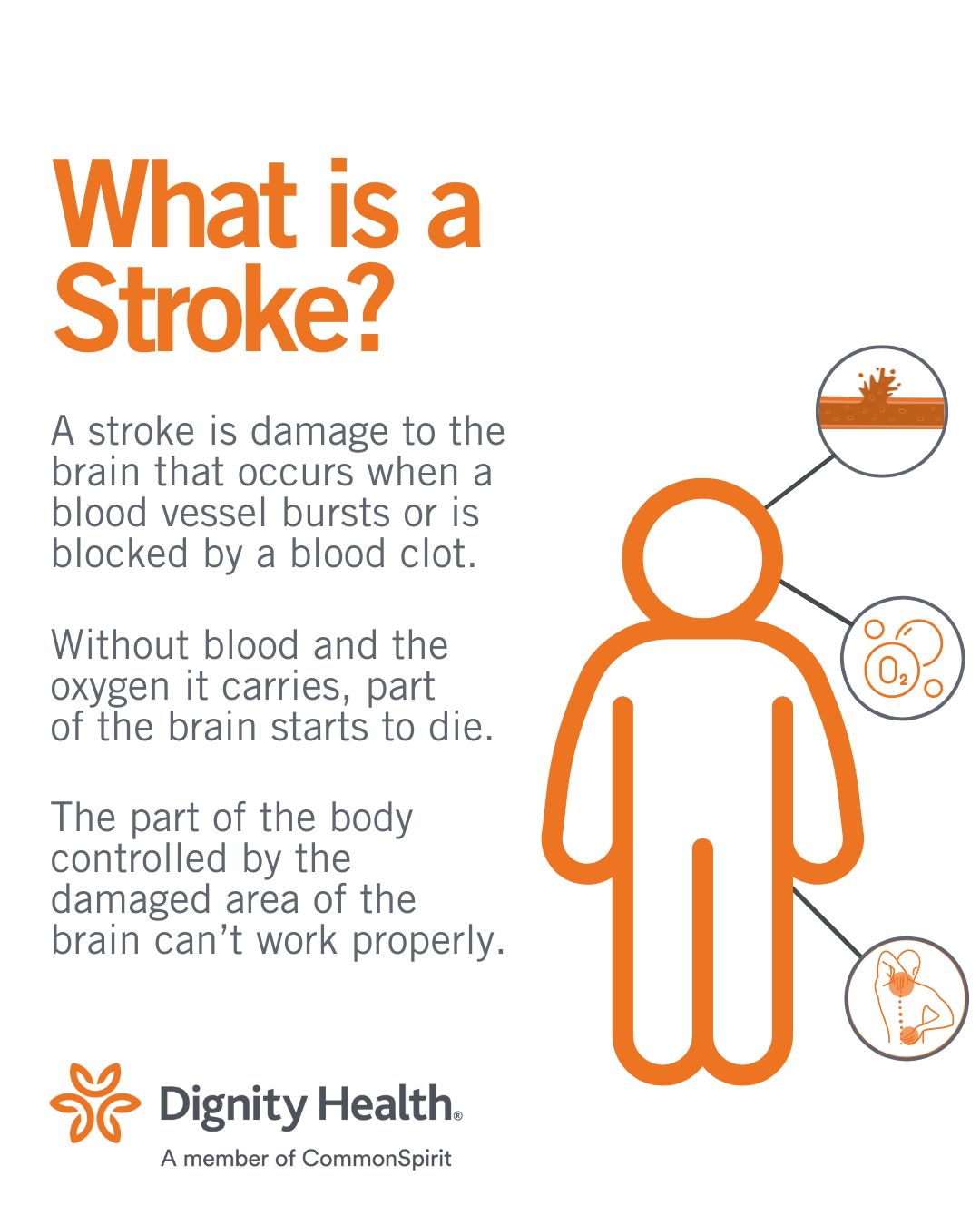
A stroke, often called a "brain attack," is a medical emergency occurring when blood flow to the brain is suddenly interrupted by a blocked artery (ischemic stroke, the most common type) or a ruptured blood vessel (hemorrhagic stroke). This oxygen deprivation causes rapid brain cell death and subsequent brain damage, impacting bodily functions controlled by those parts of the brain, including speech, movement, and memory. Recognizing stroke symptoms and seeking immediate medical attention by calling 911 is critical, as timely treatment can minimize brain damage and improve chances of recovery. Transient ischemic attacks (TIAs, commonly referred to as a 'mini stroke') are temporary blockages with stroke-like symptoms and serve as serious warning signs for a potential major stroke, also requiring prompt evaluation to help prevent future, more severe events. Understanding the urgency and acting fast are vital in managing stroke and its potentially devastating consequences.
Resources: Why Minutes Matter, Types of Stroke and Treatment
Strokes usually give warnings. It is important to know the warning signs of a stroke and seek medical attention immediately at a hospital with a stroke center. Prompt medical attention may prevent a serious stroke and prevent injury to the brain.
If you experience any of these stroke symptoms:
Act F.A.S.T. with these stroke signs:
For more information on stroke care, please call (530) 529-8000. For a physician referral, call (888) 628-1948 or use our search tool Find a Doctor.