Exciting changes are coming!
The Dignity Health website is moving to CommonSpirit.org to deliver a more patient-centered digital experience across CA, AZ, and NV.

When every second counts in a neurological emergency, At Dignity Health – St. Rose Dominican, Siena Campus offers advance comprehensive, life-saving care.
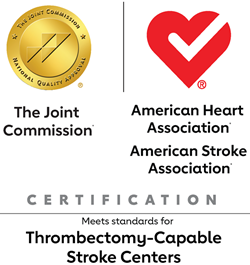
We are proudly a certified Thrombectomy-Capable Stroke Center, delivering advanced endovascular clot removal procedures (thrombectomy) for eligible patients experiencing severe strokes. Our accreditation signifies access to cutting-edge interventions and specialized emergency stroke treatment when it matters most.
What is a Thrombectomy?
When a severe ischemic stroke is caused by a large blood clot blocking blood flow to the brain, every minute is critical. Thrombectomy is a specialized, advanced medical procedure designed to remove blood clots from major blood vessels in the brain.
This minimally invasive, catheter-based procedure can be a life-changing option for eligible stroke patients. By physically extracting the clot, thrombectomy helps to quickly restore vital blood flow to the brain, significantly limiting further brain damage and improving recovery outcomes.
Stroke remains a leading cause of death and long-term disability, both in the United States and globally. Timely and comprehensive stroke care is critical for achieving the best patient outcomes. At Dignity Health, our experienced stroke care team provides specialized, coordinated treatment for individuals experiencing or recovering from a stroke, focusing on both immediate needs and crucial stroke prevention strategies.
Specialized Stroke Treatment Programs at Dignity Health
Our advanced stroke care programs are designed to address a wide range of stroke-related conditions and cerebrovascular emergencies, including:
A stroke occurs when blood flow to the brain is interrupted or significantly reduced, depriving brain tissue of oxygen and nutrients. Understanding common stroke risk factors is crucial for prevention and early intervention.
While anyone can have a stroke, certain individuals have a significantly higher risk due to a combination of lifestyle, medical conditions, and genetic predispositions.
Individuals with an elevated risk of stroke commonly present with one or more of the following factors:

Medical Conditions:
Behavioral & Lifestyle Factors:
Genetic & Demographic Factors:
A stroke is a medical emergency where every second counts, and its symptoms often manifest abruptly. It's vital to recognize these sudden signs of stroke: pay close attention if there's an immediate loss of movement or weakness, especially affecting one side of the body like an arm or a leg.
Other key stroke warning signs include one-sided facial weakness or sagging, the sudden inability to speak clearly or form a coherent sentence, vision loss or disturbance in one or both eyes, and a severe headache, particularly when accompanied by any of these other stroke indicators.
If you or someone else are experiencing a medical emergency or any signs of a stroke, please call 911 or go to the Emergency Room

To quickly assess whether a person might be experiencing a stroke, BE FAST:
If you or someone else are experiencing a medical emergency or any signs of a stroke, please call 911 or go to the Emergency Room
At Dignity Health, we understand that when it comes to a stroke, every second counts. That's why we offer leading-edge, comprehensive stroke care designed to act fast and support lasting recovery for patients.
Your journey through stroke care is meticulously planned and executed by an expert team. Our personalized approach includes:

When every second truly counts, accurate and swift stroke diagnosis is paramount. At Dignity Health, our emergency medical teams are highly trained to rapidly identify stroke symptoms. Often, our experienced physicians can initiate early diagnostic pathways based on immediate physical signs observed in the Emergency Department.
To ensure precise stroke treatment, our neurologists utilize state-of-the-art diagnostic imaging. They may order a Computed Tomography (CT) scan or Magnetic Resonance Imaging (MRI) of the head. These advanced scans are crucial for determining the type of stroke – specifically, whether it is caused by a brain bleed (hemorrhagic stroke) or a blood clot (ischemic stroke). This distinction is vital, as different types of stroke require unique and targeted treatments.
Why Rapid Diagnosis Matters for Stroke Treatment:
Quick stroke diagnosis isn't just important; it's life-saving. For ischemic stroke, caused by a blood clot, treatment with thrombolytic (clot-busting) medication can be administered within a critical window, typically within two hours of symptom onset. This rapid intervention can significantly reduce disability and improve patient outcomes. Our team's commitment to speed and accuracy ensures that eligible patients receive the most effective care promptly.
3001 St. Rose Parkway
Henderson, NV 89052
(702) 616-5000
If you or someone else are experiencing a medical emergency or any signs of a stroke, please call 911 or go to the Emergency Room